
Teaching to the Child vs. Teaching to the Test:
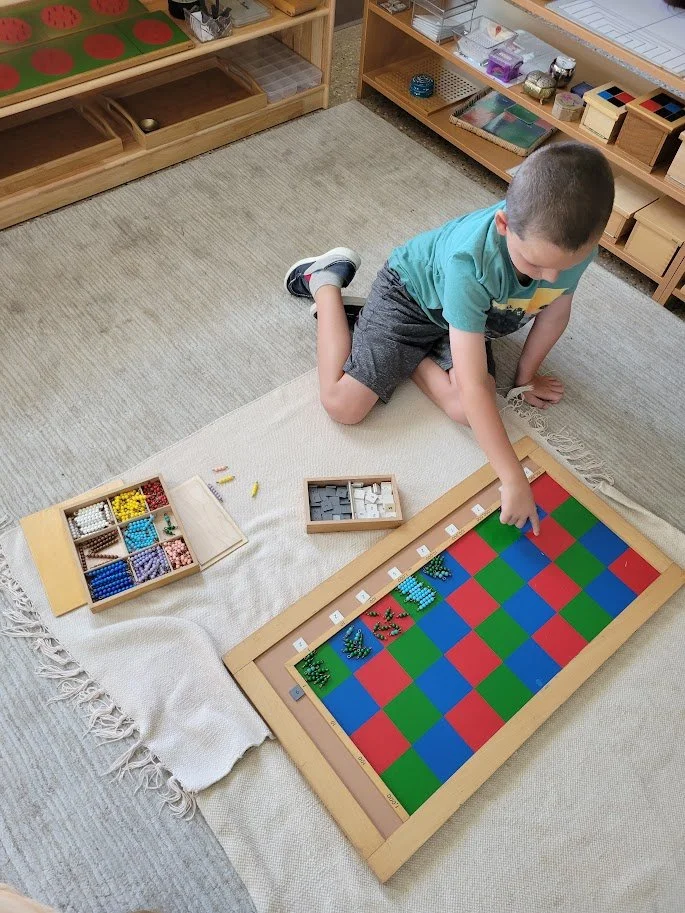
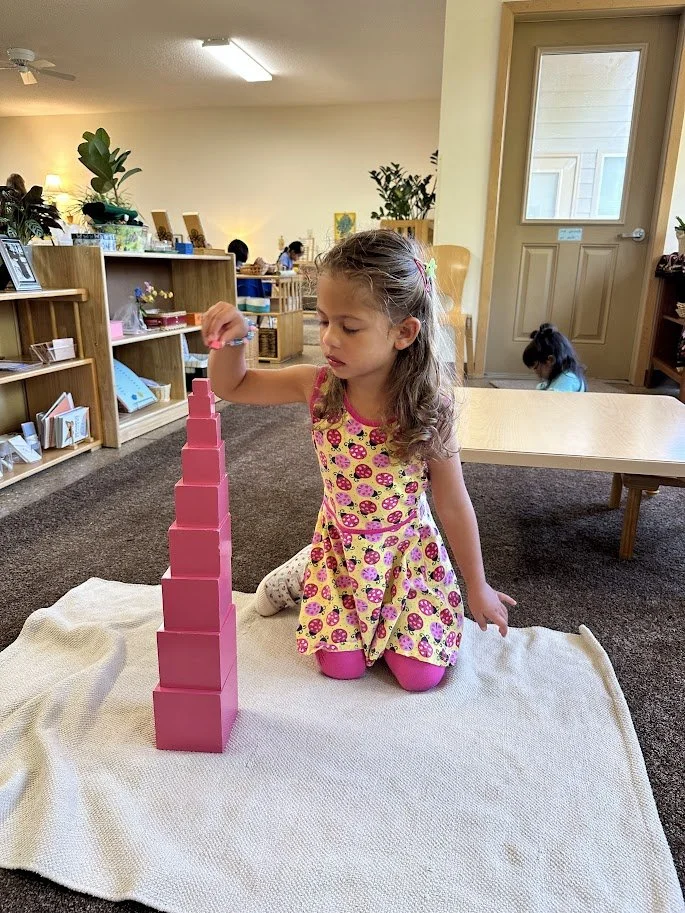
Montessori Allows for Deep Learning
Some test styles, such as standardized tests or multiple choice questions, also limit children to one specific way of solving a problem or answering a question. Through Montessori education, we are developing critical thinking skills; students may come up with a handful of ways to correctly solve an equation or reflect accuracy. That’s the type of abstraction we are looking for in mastery; it’s not about learning something a specific way, but about learning how to be flexible thinkers. Scientific research has proven over and over again that Montessori children are stronger critical thinkers, have better executive functioning skills, and more advanced social skills than their non-Montessori peers. Here is just one example of those findings.
Some test styles, such as standardized tests or multiple choice questions, also limit children to one specific way of solving a problem or answering a question. Through Montessori education, we are developing critical thinking skills; students may come up with a handful of ways to correctly solve an equation or reflect accuracy. That’s the type of abstraction we are looking for in mastery; it’s not about learning something a specific way, but about learning how to be flexible thinkers. Scientific research has proven over and over again that Montessori children are stronger critical thinkers, have better executive functioning skills, and more advanced social skills than their non-Montessori peers. Here is just one example of those findings.
From Annie Murphy Paul’s article, linked above: “The process of pulling up information from memory also fosters what researchers call deep learning. Students engaging in deep learning
are able to draw inferences from, and make connections among, the facts they know and are able to apply to their knowledge in varied contexts…” (2015). Montessori lessons are developed in a way that allows teachers to always know the child’s place in the progression of lessons. The way lessons are presented reviews previous required knowledge before introducing a new concept. If the child doesn’t remember or have a good enough understanding to move on to the lesson, the teacher will gracefully turn the lesson into a review, and then represent when the child is ready, perhaps in a few days. This method of assessment is called a retrieval practice, and it’s scientifically proven as a supportive way to test knowledge.
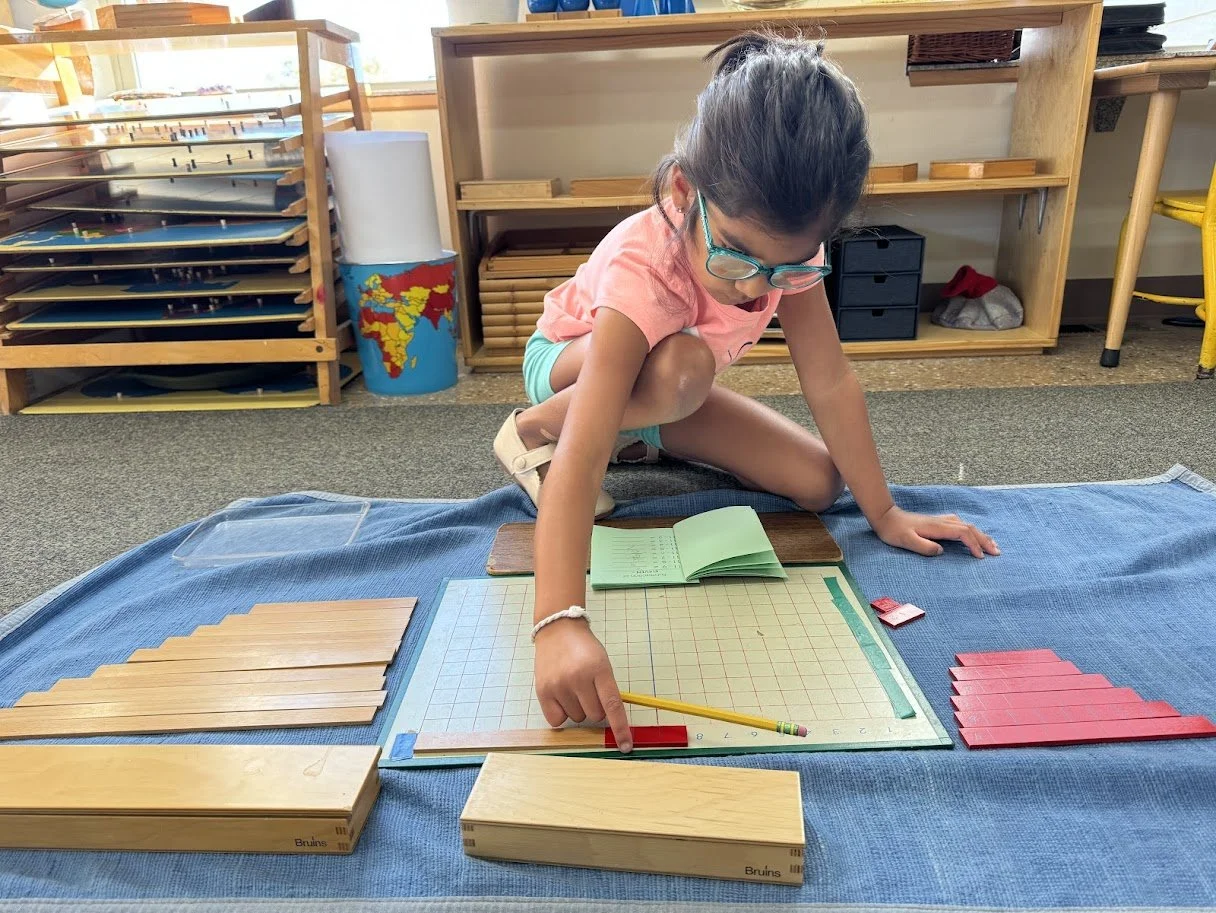
Lesson Styles and Teacher-led Tracking Provide Cross-Reference
In Children’s House, there is a way to test knowledge “in the moment,” through a 3-Period Lesson. This is a beautiful, game-like assessment that children do not even realize is evaluating their knowledge, typically of vocabulary or symbols like numbers or letters, but it is very important and helpful for teachers to use when tracking.
Montessori-trained teachers are also meticulous observers and notetakers. They create entire albums that allow them to track the progress of every student in their classroom: what lessons have they had, repeated, and/or mastered. Teachers refer to these notes while preparing the next week’s or month’s lesson plans. This individualized record keeping and lesson planning for each student requires a high level of organization and attention to detail on the part of the teacher. From it, they are always prepared to give the next bit of information, demonstration, or lesson to every child in their classroom. This evaluation method is called formative assessment, and it’s been proven to build metacognition.
Record keeping works alongside student-recorded organization in a work journal at the Elementary and Adolescent levels. Students have 1:1 meetings with teachers weekly, and during that time, “compare notes” about what the student has been working on that week. Students record the amount of time, quantity of equations completed or pages of research written, and classmates whom they worked with in their personal journals. This example of executive functioning takes years to refine, but is worth the work; learning how to manage time and complete larger projects using goal setting is a research-based method practicing executive functioning skills required for high school and beyond.
Along with using Montessori lessons from training, teachers also cross-reference the school district’s public school curriculum guidelines on an annual basis. They are sure to present all of the information from the public school curriculum within the three year cycle of a student in our classroom. This allows teachers to make sure that students in our school are never falling behind their peers in the sense of exposure; happily, we often find that students have learned far more than their district peers, because of the depth and breadth of our Montessori curriculum.
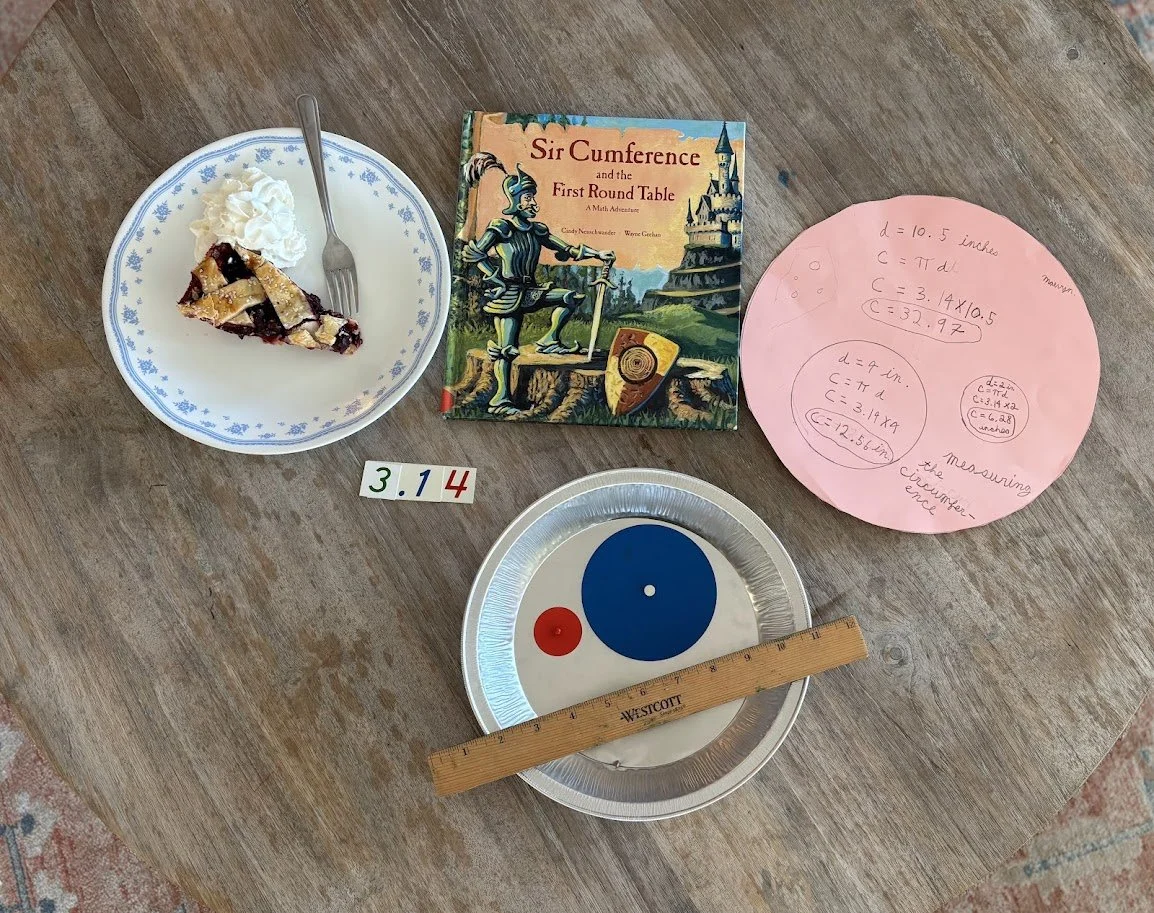
While Montessori students are not expected to take tests, they are expected to show what they’ve learned through a presentation, essay, research report, or similar, open-ended method. This type of assessment is called project-based assessment. Thanks to the 3-hour work cycle and elimination of jolting transitions between subjects every 30-45 minutes, students are able to think deeply, find “flow,” and experience longer periods of concentration.
During those work cycles, students may find a way to show their knowledge by writing a research report (actually synthesizing, not just copying books, starting in Children’s House), producing a play, writing a song or poem, presenting a poster in an Expo or Forum event, or
taking presenting the content to peers or other classrooms. At the Upper Elementary and Adolescent levels, students are taught about rubrics and given examples of completed projects. They also receive deadlines for projects, like Book Clubs or final drafts of papers, and are expected to meet those timelines.
Montessorians tend to be humble about the work that they do for our students; I think this is in part due to the child-centered approach. Montessori teachers do not take nearly enough credit for the work they are doing for their students, the diplomas they’ve earned, or the professional development they continue to complete. It’s important to keep in mind that, although Montessori
education strays from the norms of traditional education, there continues to be research showing that the “magic” happening in schools like MCMS is actually science. Please visit our family library in the lobby for inspirational books about our method.
